Backlog and dispatch queue
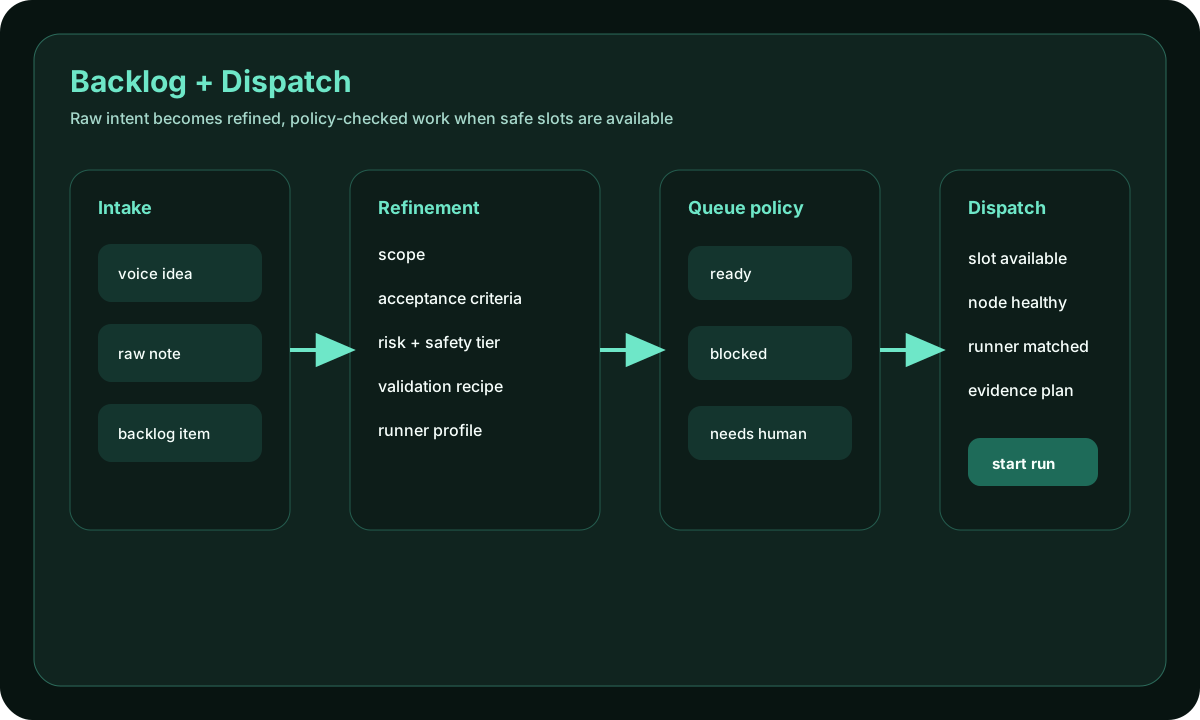
The backlog and dispatch queue are the bridge between raw intent and available agent capacity. For the hands-on Command Center flow, see Roadmap to Work Graph.
The long-term vision is that Farmslot can continuously ingest ideas, refine them with the human, break them down into actionable work, and dispatch the right item when a safe slot becomes available.
This area is still an active architecture direction, not a finished contract. The important product intent is that external systems can feed the loop, while Farmslot becomes the central place where intent is refined into supervised agent work.
Why it matters
Once you have many slots across multiple machines, the bottleneck shifts.
The problem is no longer only “can an agent implement this?” It becomes:
- Which work should run next?
- Is the task scoped enough for an agent?
- Which runner/model/profile should handle it?
- Which project adapter and validation recipe apply?
- Is a slot safe and available?
- What evidence will the operator need at the end?
Queue model
Intake paths
Voice capture is one intake path, and the canonical voice-to-backlog flow lives in Mobile Companion. Other sources can include GitHub, Jira, issue trackers, docs, meeting notes, or existing project backlogs.
Those systems should be inputs, not the place where the agent-work loop fragments. Farmslot's backlog is where raw intent gets centralized, refined with the operator, broken into dispatchable items, and connected to slots, runners, evidence, and approval gates.
Human-in-the-loop refinement
Backlog automation should not mean raw ideas go straight to execution. The target loop is collaborative:
- ingest a rough idea or external issue;
- ask clarifying questions or propose a breakdown;
- let the operator adjust priority, scope, risk, and taste;
- create smaller dispatch candidates with acceptance criteria and evidence expectations;
- keep only ready work eligible for automatic dispatch.
Constant roadmap ingestion
The eventual system should behave like a living roadmap queue:
- ideas enter continuously from voice, external systems, and operator notes;
- the system refines, deduplicates, and prioritizes them with the human;
- available slots pull ready work when policy allows;
- evidence returns to the human;
- learnings improve future task generation and validation.
The operator remains in control of judgment and approval, while the mechanical parts of intake, refinement, queueing, dispatch, and evidence collection become continuous.